By Kenny Cook EngTech TMIET
The distribution board is the heart of your electrical installation. It splits the supply into circuits and protects each one. Boards can last a long time, but there comes a point when repairing or extending an old one stops making sense. These are the signs we look for.
Signs it’s time to replace
- Your EICR flags it. Codes against the board itself, such as damaged enclosures, missing covers or unsuitable protective devices, often mean replacement is the sensible fix rather than a patch.
- No spare ways. If you can’t add a circuit for new equipment, EV chargers or an extension without overloading the board, it’s time for a bigger one.
- Old or obsolete equipment. Boards with rewireable fuses, or with breakers that are no longer made, are hard to maintain and often don’t give the protection modern installations need.
- Missing RCD protection. Most socket-outlet circuits now need 30mA RCD protection. Older boards often have none, or one RCD protecting everything, so a single fault trips the whole board.
- Nuisance tripping. Frequent tripping can point to faults on circuits, but it can also mean the board’s layout or protection no longer suits how the building is used.
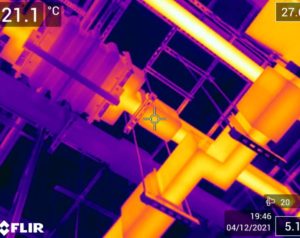
- Heat, burning smells or scorch marks. These need looking at straight away. A thermal imaging survey can find hot spots before they become a fire.
- A change of use. Turning offices into a gym, a warehouse into a workshop or adding kitchen equipment can change the load completely.
What current regulations expect
A new board has to meet the current edition of BS 7671. A few points worth knowing:
- RCD protection is required for most socket-outlet circuits, and for cables buried in walls where they aren’t otherwise protected.
- Surge protection must be fitted where a surge could cause significant financial or data loss, which covers most businesses. In other cases it can only be left out if the building owner declares it isn’t needed and accepts the risk.
- Arc fault detection devices (AFDDs) are required on socket circuits in some building types, such as care homes, houses in multiple occupation, purpose-built student accommodation and high-rise residential buildings, and recommended elsewhere.
We cover the latest changes in our guide to Amendment 4 to BS 7671.
What’s involved in a changeover
A board replacement usually means the circuits it feeds are off while the old board is removed and the new one is fitted, connected and tested. For a small board that can be a few hours; for larger boards it’s planned around your business, often early in the morning or at a weekend. Every circuit is tested when it’s reconnected, so faults that were hidden on the old board can come to light and may need fixing before they go back on.
At the end you get an Electrical Installation Certificate, a clearly labelled board and an up-to-date circuit chart.
Not sure about yours?
If your EICR has raised concerns about a board, or you’re planning to add load, we can survey it and give you honest advice on whether to repair, extend or replace. See our electrical installation services, tell us about your project or call 01525 582582.
About the author: Kenny Cook EngTech TMIET has 15 years in the electrical trade and looks after sales and projects at Martin Cook Electrical Services. Got a question about your building’s electrics? Email kenny@martincookelectrical.co.uk.