By Kenny Cook EngTech MIET
The first question with workplace EV charging isn’t which charger to buy. It’s how many your electricity supply can actually support. Get that wrong and you’ll either trip the main fuse on a busy afternoon or pay for an upgrade you didn’t need.
What EV chargers draw
- 7kW single-phase charger: around 32A on one phase.
- 22kW three-phase charger: around 32A on each phase.
- Rapid DC chargers: 50kW and up, which usually means a dedicated supply.
Ten 7kW chargers spread across three phases add more than 100A of load on top of everything the building already uses. That’s why the existing demand matters so much.
Measure first, then design
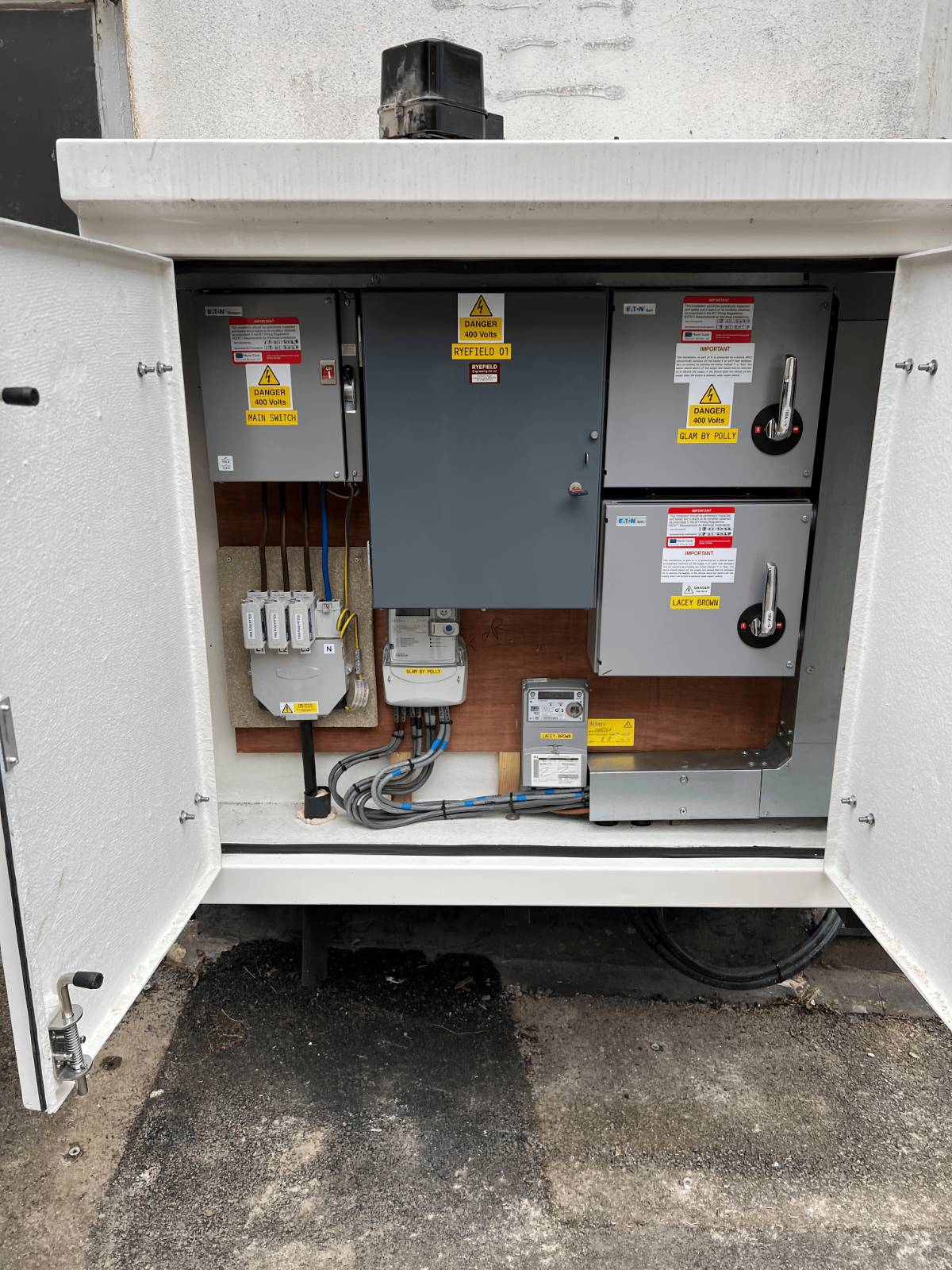
The wiring regulations require the maximum demand of an installation to be assessed before adding load. On a busy commercial site, the most reliable way to do that is to measure it. A power load survey logs your supply over a normal working week, so we can see your peak demand and, just as importantly, when it happens.
If your peak is mid-morning and most cars will charge in the afternoon or overnight, you may have more spare capacity than you think.
Your options once you know the numbers
- Enough headroom: install the chargers you want on the existing supply.
- Some headroom: use load management, where chargers share the available capacity and slow down when the building is busy.
- No headroom: apply to the network operator for an upgrade, with real data to back up the request.
For more on the chargers themselves, see our commercial EV charging installation page.
Thinking about EV charging?
Start with the numbers. We log your supply with our own equipment and tell you how many charge points it can support. See how our power load surveys work, ask for a quote or call 01525 582582.
About the author: Kenny Cook EngTech MIET has 15 years in the electrical trade and looks after sales and projects at Martin Cook Electrical Services. Got a question about your building’s electrics? Email kenny@martincookelectrical.co.uk.